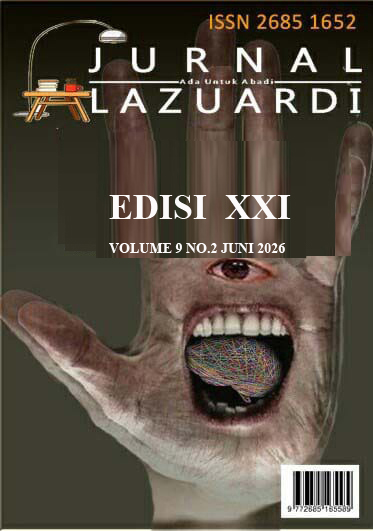
Kohesi Leksikal Pada Abstrak Skripsi Mahasiswa Angkatan 2021 Program Studi Pendidikan Bahasa dan Sastra Indonesia
Abstract
This study aims to analyze the use of lexical cohesion in the abstracts of theses written by students majoring in Indonesian language and literature in the 2021 cohort. This study uses a qualitative descriptive method, and the data in this study were collected through reading, note-taking, categorization, conclusion, and data presentation techniques in coding cards. The theory used in this study is the theory of cohesion based on the perspectives of Halladay and Hasan. The results of the study show that the use of lexical cohesion, which consists of six categories, namely repetition, synonymy, antonymy, hyponymy, collocation, and equivalence, increases the coherence of the abstract through the connection between linguistic elements and clarifies the meaning strategically, as well as enriching the message or information concisely and clearly in the abstract.
Copyright (c) 2026 Jurnal Lazuardi

This work is licensed under a Creative Commons Attribution-NonCommercial-NoDerivatives 4.0 International License.
Copyright is protected by Law Number 28 of 2004 concerning Copyright, that Copyright is the exclusive right of the creator which arises automatically based on declarative principles after a work is manifested in a tangible form without reducing restrictions in accordance with the provisions of laws and regulations.